Several months ago, The Vegetarian Resource Group began a lengthy research
project with the goal of creating a Low-Cost Vegan Menus Based on USDA
Supplemental Nutrition Assistance Program (SNAP) Budget. Little did we know how
important this piece became during the pandemic. With so many people
out-of-work there’s even greater need for food budgeting.
The piece states, “How inexpensive can a vegan diet be and still provide
health-supporting food without requiring hours of travel to different stores
and lots of meal preparation? Sometimes vegan diets are perceived as expensive.
Our experience has been that they can be pricey if we choose lots of
convenience foods and out-of-season produce, and mainly shop at specialty
stores. We’ve also found that vegan diets can be incredibly inexpensive and can
be planned using foods that are readily available in supermarkets and big-box
stores. We decided to plan a week of vegan menus whose cost would not exceed
the food cost allotment from the United States Department of Agriculture’s food
assistance program.”
The article includes a SNAP Weekly Low-Cost Vegan Menu, as well as several
vegan recipes.
When I tell people that I eat a vegan diet, one of the very first questions
that I get asked is, “Wow, isn’t that expensive?” My answer to this question
is, “It depends.” Eating a vegan diet can get quite costly
if we’re buying lots of mock meats, vegan “cheeses,” and other processed
plant-based foods. But a vegan diet doesn’t have to be
expensive. Essential staples that I keep in my pantry are also some of the
least costly items at the grocery store. Foods such as beans, lentils, rice,
pasta, and canned sauces are in many budget recipes. For numerous Americans who
live under the poverty line, the misconception that vegan foods are expensive
is a barrier to a lifestyle change.
The Dollar Tree is an option for grocery shopping on a budget because these
stores offer a range of products that are nutritious, plant-based, and $1 or
less. My biggest tip for shopping at Dollar Tree is to remember that it’s not a
grocery store; instead, it’s a store that has a lot of groceries. Because of
this, there are a few things to consider:
– Fresh fruits and vegetables are not available at most Dollar Tree stores.
This menu will contain frozen or canned fruits and vegetables. Frozen produce
is often nutritionally similar to fresh fruits and vegetables (1).
– Products are in smaller packages, so buying multiples of the same foods
will probably be necessary.
– Some nutrients may be harder to find in foods at the Dollar Tree. Pay
special attention to vitamin D, vitamin B12, zinc, iron, and calcium.
With these considerations, I’ve created a one-week menu that will feed a
family of 4 (2 adults and two children who are 8- and 16-years-old). In
November 2019 at the Dollar Tree in Greece, NY, this menu cost $116.
1 Tablespoon vegetable oil
(available at the dollar store, or use whatever oil is already on hand)
Two 32-oz packages frozen
shoestring fries
Four 14-oz packages frozen peppers
& onions
Two 15-oz cans black beans, drained
and rinsed
Two 1-oz packets taco seasoning
10-oz can diced tomatoes with
chilies, drained
In a pan, sauté peppers & onions and shoestring fries in oil until the
fries are golden brown. Add beans and taco seasoning and stir until taco
seasoning is well distributed. Cook until beans are warm. Serve topped with
diced tomatoes.
Breakfast Burrito (serves four)
4 tortillas
Leftovers from Tex-Mex Hash (about
half the recipe)
Spoon leftover hash into tortillas
Pancakes (serves 4)
by Reed Mangels, PhD, RD
1¾ cups all-purpose flour
1 Tablespoon + 2¼ teaspoons baking
powder
3/8 teaspoon salt
1½ Tablespoons sugar
1¾ cups soymilk
5½ Tablespoons oil, divided
Combine flour, baking powder, salt, and sugar in a large bowl. Add 3½
Tablespoons of oil and mix until flour is moistened. Place the remaining 2
Tablespoons of oil in a large skillet and heat on medium-high heat. When the
oil is hot, pour batter into circles about 4 inches across. Pancakes are ready
to turn when the batter is bubbling almost to the middle. Flip and cook on the
other side about 2 more minutes or until golden brown.
Sautéed Garbanzo Bean Wrap (serves 4)
1 Tablespoon vegetable oil
2 cups garbanzo beans
2 cups frozen spinach, thawed
2 teaspoons minced garlic
4 tortillas
In a pan, sauté beans, thawed spinach, and garlic in oil until spinach is
warm and beans are slightly crispy. Add sautéed mixture to a tortilla, roll up,
and serve.
Peanut Butter & Jelly Roll-Up (serves 1)
2 Tablespoons peanut butter
3 Tablespoons jelly
1 tortilla
Spread peanut butter and jelly onto tortilla. Roll tortilla into a log.
Slice into approximately ½-inch slices.
Tuscan-Inspired Gnocchi (serves 4)
Two 17.6-oz packages gnocchi (the brand sold at most Dollar Trees is
plant-based, but double check your packaging)
1 Tablespoon vegetable oil
Half 10-oz package frozen spinach
15-oz can garbanzo beans, rinsed
and drained
1 Tablespoon minced garlic
1 handful sundried tomatoes
Cook gnocchi according to package instructions. Sauté spinach and beans with
garlic in oil. Add tomatoes. Top gnocchi with veggies.
Beans & Rice Soup (serves 8)
1 Tablespoon vegetable oil
1 Tablespoon minced garlic
Two 10-oz packages frozen mixed
vegetables
Two 10-oz packages frozen pepper
and onions
12 cups vegetable broth
2 cups dried beans, soaked
overnight, and drained
2 cups white rice (if brown rice is
available, this adds even more nutrients to the dish)
Salt and pepper to taste
In a large pot, sauté garlic, vegetables, peppers, and onions in oil. Add
beans and vegetable broth, heat until boiling and reduce heat to simmer for 30
minutes. Add rice and bring back to a boil, reduce heat and simmer for 30 more
minutes. Add salt and pepper to taste. Make sure rice and beans are cooked to
the desired texture. Serve immediately or freeze for later.
Chili Fries (serves 4)
10-oz package frozen peppers &
onions
Vegetable oil for sautéing
Two 15-oz cans kidney beans, rinsed
and drained
15-oz can tomato sauce
10-oz can diced tomatoes
3 Tablespoons chili powder
32-oz package frozen French fries
In a large pot, sauté peppers and onions in oil until peppers are soft and
onions are translucent. Add kidney beans, tomato sauce, diced tomato, and chili
powder. Simmer until warm and well flavored. Bake fries according to package
instructions. Top fries with chili.
Broccoli Stir-Fry with Garbanzo Beans (serves 4)
1 Tablespoon vegetable oil
Two 10-oz packages broccoli
stir-fry mix
Two 15-oz cans of garbanzo beans,
rinsed and drained
In a frying pan, sauté stir-fry mix until veggies are soft. Add garbanzo
beans and heat until warm. Season as desired, I think soy sauce will taste good
if you have it, but salt and pepper to taste are also delicious.
Lentil Sloppy Rice (serves 8)
2 cups dry lentils, sorted and
rinsed
2 cups white rice, uncooked
Water for cooking lentils and rice
Two 15-oz cans sloppy joe sauce
Cook lentils according to package instructions. Cook rice according to
package instructions. Stir sloppy joe sauce into lentils, and simmer. Place
lentils on top of rice and serve.
Lentil Bolognese (serves 8)
1 Tablespoon vegetable oil
10-oz package frozen peppers and
onions
1 Tablespoon minced garlic
½ cup canned mushrooms
10-oz can diced tomatoes
1 cup vegetable broth
1 lb. lentils, cooked using package
instructions
1 teaspoon paprika
1 teaspoon dried basil
1 teaspoon dried oregano
1-lb. box pasta
In a large pot, sauté peppers, onions, and garlic for 4-5 minutes in oil.
Add mushrooms, diced tomatoes, and vegetable broth, bring to a boil and reduce
heat to simmer. Stir in lentils and spices. Simmer until all flavors combine.
Cook pasta according to package instructions. Top pasta with Bolognese sauce.
Are you looking for places to
purchase vegan candy and other treats for Halloween? Here’s some online sources
that sell vegan goodies with a Halloween theme, as well as items sold in stores:
Ishva is a winner of The Vegetarian Resource Group video
contest. Ishva stated: I have been vegetarian my entire life. Hence, meat
consumption has always been foreign and baffling to me. However, only recently,
I ventured into veganism & plant-based living for moral reasons, and I already know that I am not turning back. Leaving dairy was
difficult, but it is worth it. Now, not only do I notice a difference in my
skin and overall health, but I also feel a sense of relief because I no more
feel guilty when looking down at my plate. In my poem, “CHOICE,” I
try to explain the wrongfulness in animal-product consumption
that I experienced consuming dairy, ultimately striving to inspire masses to
make the right choice.
The
International Vegan Film Festival announced that virtual festival “attendees”
are now able to virtually purchase a movie ticket or festival pass to watch
films at their leisure, from October
10-17 through the online platform, Eventive. For more information,
see: https://www.theivff.com/
Are you or someone you know raising vegan kids? If so, the article Feeding Vegan Kids written by Reed Mangels, PhD, RD provides helpful information that is hard to come by. You’ll find an Eating Table for Vegan Babies Ages 6-12 Months, Diet Plans for Vegan Children (ages 1-13), and so much more.
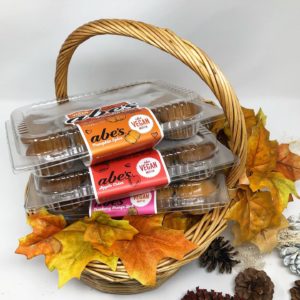
Abe’s offers some autumn muffin flavors: Apple Cider, Cranberry Orange Zest, and Pumpkin! Look for these delicious muffins in your local grocer: https://www.abesmuffins.com/store-locator
The Vegetarian Resource Group (VRG) is a non-profit organization dedicated to educating the public on veganism and the interrelated issues of health, nutrition, ecology, ethics, and world hunger. We have been helping health professionals, food services, businesses, educators, students, vegans, and vegetarians since 1982. In addition to publishing the Vegan Journal, VRG produces and sells a number of books.
Sign up for our newsletter to receive recipes, ingredient information, reviews of new products, announcements of new books, free samples of products, and other VRG materials.