The Vegetarian Resource Group is a vegan activist non-profit
organization that does outreach all-year-long. For example, VRG tables at
different events throughout the USA and also sends literature free of charge to
other groups/individuals doing educational activities in schools, hospitals,
camps, restaurants, libraries, offices, etc. Our ability to continue doing this
depends on people like you! Your donations allow us to promote the vegan
message whenever we’re called upon for assistance. Please consider becoming a
monthly or quarterly donor to The Vegetarian Resource Group.
Thanks so much for your support. You can become a monthly or
quarterly donor online here: vrg.org/donate
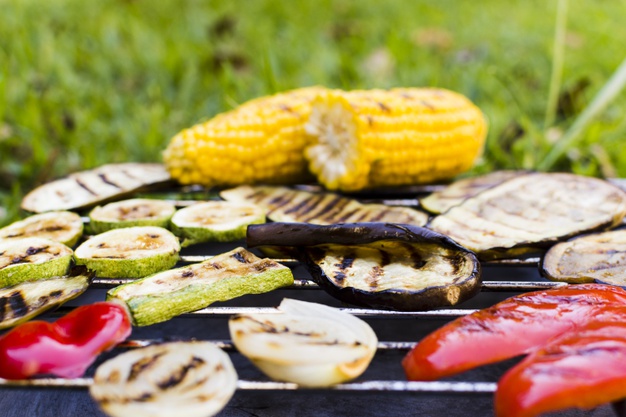
Vegetarian Journal has ran two articles on vegan grilling that you might find helpful:
Gourmet Grilling by Chef Nancy Berkoff, EdD, RD includes
grilling tips as well as recipes for Grilled Eggplant, Mediterranean Grilled
Portobellos with Pine Nuts, Curried Barbecue Tempeh, Roasted Pepper and
Eggplant Dip, Pineapple Peach Salsa, Japanese-Style Grilled Asparagus, Grilled
Sweet Peaches, and Roasted Corn. See: https://www.vrg.org/journal/2002issue3/2002_issue3_gourmet.php
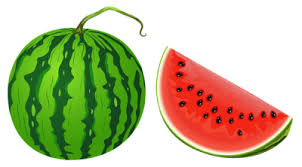
The recent issue of Vegetarian Journal features quick and easy suggestions for preparing dishes containing watermelon. Chef Nancy Berkoff starts off by stating, “Watermelon isn’t just a juicy warm-weather treat. This fruit contains potassium and vitamins A and C. Humans have been feasting on watermelon for centuries. Although native to Africa, watermelons have been known in India since prehistoric times. The first recorded watermelon harvest took place 5,000 years ago in Egypt. Pictures of the fruit were found in paintings on the walls of ancient buildings.
We never get much beyond slicing
watermelon and offering it as a terrific accompaniment to summer meals.
Watermelon is a “total utilization” fruit, though. You can use the
interior, the juice, the seeds, and the rind! It is perfect with sweet (cereal,
vegan yogurt, baked goods) or savory (grilled veggie dogs or burgers, pasta salad)
foods.”
Some of Nancy’s suggestions include: To
go savory with your watermelon, you can use watermelon cubes to “tame the
heat” in curries and chilies, in veggie salad with onions and garlic, and
in stir-fries or sautés (add small watermelon cubes at the last minute), or use
as a garnish. Try a “watermelon steak” (a thick slice of watermelon,
rind removed) topped with slices of ripe avocado and shredded jicama, chopped
parsley, and a squeeze of fresh lime juice. If you would like to get
adventurous, do some web searches for a watermelon curry recipe, popular in
Caribbean and South Asian cuisine.
A reader had a question about B12 for their one-year-old. They supplemented B12
during pregnancy, breastfed exclusively for 6 months, and after that used a
soy-based formula. At 6 months they started introducing solid foods, and
currently use about 12-24 ounces of formula, with limited breastfeeding.
The RDA for vitamin B12 is 0.5 micrograms per
day from age 6-12 months and 0.9 micrograms from 1-3 years. Formula
provides some vitamin B12. The label should tell you how much is in the
formula. Since the child is consuming limited breastmilk, we can’t
count on that to provide much vitamin B12. As the child moves away from
formula, I’d suggest adding in a vitamin B12-fortified soymilk. You can see how
much vitamin B12 is in 8 ounces of a number of brands of soymilk on our website
at https://www.vrg.org/nutshell/Guide_to_Soymilks_2019.pdf
Read labels to confirm the amount in the brand you buy.
Most fortified soymilks have at least 0.9 micrograms in 8
ounces so as little as 1 cup a day should meet the one year old’s needs for
vitamin B12. You can also add some nutritional yeast fortified with
vitamin B12 (Red Star Vegetarian Support Formula is one brand) to foods to
provide additional vitamin B12.
Most children’s multivitamins supply vitamin B12 and are a
simple way to meet vitamin B12 needs. Look for a multivitamin that supplies at
least the RDA for vitamin B12.
There’s no real advantage to taking a large dose of vitamin
B12. You may need to smash the vitamin and mix it with food or look for a
liquid multivitamin to avoid choking issues.
Here are some multivitamins that appear to not contain
animal products and that provide vitamin B12:
Freeda Chewable Vitalets – 1 tablet has 3 mcg of vitamin B12
Yummy Bears – 3 bears have 3 micrograms of vitamin B12
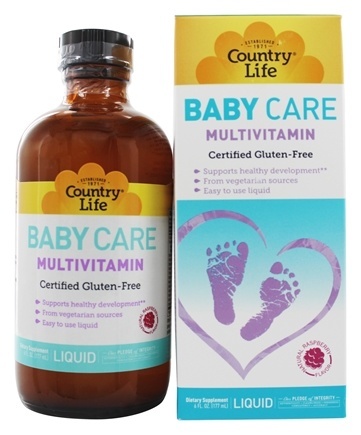
Country Life Baby Care – 1 tsp – 2 mcg of vitamin B12
Rainbow Light Kids – 1 tablet – 1 mcg of vitamin B12
There is some evidence that it’s better to get vitamin B12 a
couple of times a day so you may want to break the multivitamin in half and
give half in the morning and half later in the day (or have fortified soymilk a
couple of times a day).
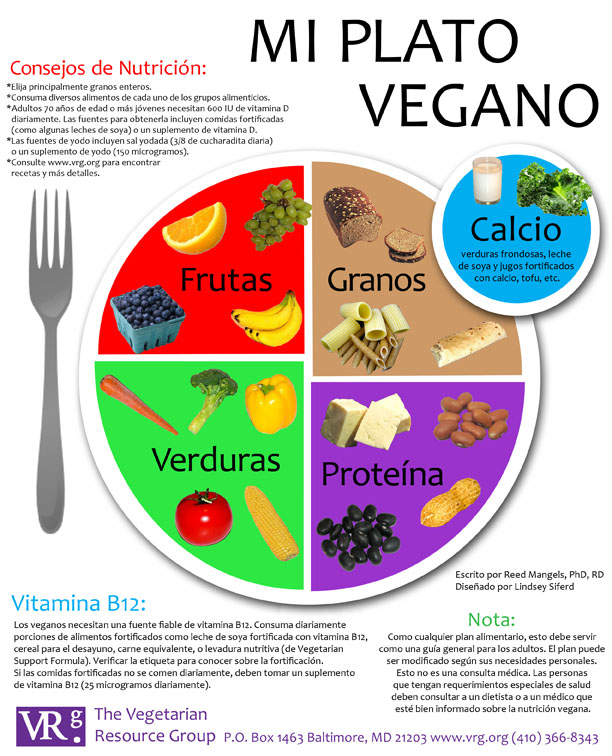
From age 1-3 years the RDA for calcium is 700 milligrams per day. Most calcium-fortified soymilks provide at least 250 milligrams of calcium in a cup. Other good sources of calcium are listed on our website: https://www.vrg.org/nutrition/calcium.php
The contents of this posting, our website, and our other publications, including Vegetarian Journal, are not intended to provide personal medical advice. Medical advice should be obtained from a qualified health professional. We often depend on product and ingredient information from company statements. It is impossible to be 100% sure about a statement, info can change, people have different views, and mistakes can be made. Please use your best judgment about whether a product is suitable for you. To be sure, do further research or confirmation on your own.
According to a survey by the
International Food Information Council Foundation, about one-third of people that heard of plant based diets
(32%) say plant based is a vegan diet that avoids all animal products,
including eggs and dairy. A similar percentage (30%) define it as a diet that
emphasizes minimally processed foods that come from plants, with limited
consumption of animal meat, eggs and dairy. Twenty percent believe it to be a
vegetarian diet that avoids animal meat. Eight percent say it is a diet in
which you try to get as many fruits and vegetables as possible, with no limit
on consuming animal meat, eggs and dairy.
The Stanford Inn by the Sea in Mendocino, California
The Vegetarian Resource Group website features a list of Veggie Bed &
Breakfasts and Retreats around the world. You might want to support one of
these establishments the next time you are on vacation! Let us know of other
establishments that should be added to our list.
The recent issue of Vegetarian Journal features French vegan recipes created by Angélique Complainville, while she was interning with The Vegetarian Resource Group. Enjoy preparing a Grilled Avocado Sandwich, Ratatouille, Pissaladière (the French equivalent to an Italian pizza), Niçoise Salad, and Crêpes.
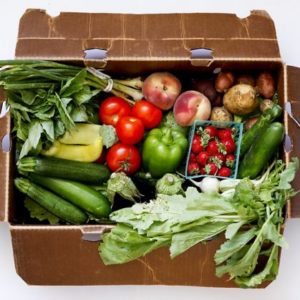
If you ever find yourself in the position of being homebound – unable to leave the house due to illness, the inability to drive, or some other reason – it is still entirely possible to maintain a nutritionally balanced vegan lifestyle. I’ve been there; put on bedrest and unable to drive for an entire month post-surgery. After some internet sleuthing, I found that it’s not necessary to leave my bed to get my preferred veggie options to my house, even if I could! There are so many meal kit, grocery, and food delivery service programs that allow one to leap effortlessly over the boundary of getting food into the house. Below are just a few of these options – but make sure to look into which programs work best for you depending on your location, budget, skills, and taste.
CSA Programs – Community supported agriculture, popularly known as “farm share” programs, offer subscriptions or memberships for consumers to receive regular (usually weekly) deliveries of locally-grown, fresh farm products during the harvest system. These programs are usually offered by a single farmer or group of farmers and are based on a partial or total advance payment of the subscription or membership fee. Websites such as localharvest.org, usda.gov, and greenpeople.org can help to connect you to CSA’s in your area. Be aware that not all CSA’s deliver depending on the particular farms involved and your location. Delivery Options – Grocery shopping can now be done entirely from the comfort of your own home and many of these programs offer same day delivery! AmazonFresh offers prime members in major cities a wide selection of fresh produce, grocery items, and meal kits, as well as Whole Foods 365 brand products, with organic and same day delivery options. Thrive Market is a membership-based program that offers non-GMO, organic food, home and beauty products at wholesale prices. Each membership also sponsors a free membership for a low-income family in an effort to bring people into more food-accessible communities. Fresh Direct is an exclusively East-coast delivery program that partners with local farms to bring food to customers through a short supply chain – straight from the farm to your door. Instacart allows customers to order fresh food and groceries from their affiliated stores such as Wegmans, Fairway, Aldi, Costco, and more, with same day delivery. Brandless is a budget company that operates on a membership system and supplies non-GMO as well as organic grocery products, most for as low as for $3. These are just a few of the many grocery-delivery services available across the contiguous US, and since not all of them are offered everywhere it is best to do your own research to find which program works best for you.
Meal Delivery Services – Meal delivery services have taken the country by storm – catering to busy people who want to take the guess work out of the kitchen while still flexing their culinary muscles. You can set preferences based on taste, dietary restrictions, skill level, number of persons, and frequency of delivery. There are all-vegan companies such as Veestro, Food Nerd, Mama Sezz, Veg Ready, Purple Carrot, and 22 Days Nutrition. Other companies may not be entirely vegan, but have a wide selection of vegan and vegetarian options such as Healthy Chef Creations, Green Chef, Hello Fresh, Peach Dish, and many more.
Restaurant Delivery and Takeout – Many of your favorite restaurants with vegan and vegetarian options offer delivery on their own, but you can also get your favorite vegan food delivered through companies such as Uber Eats, Postmates, GrubHub, Door Dash, and more depending on your location in the US.
Once the food is home, the homebound person would do well to keep in mind some of these tips for food storage and preservation to minimize spoilage, waste, and the need to re-employ one of these delivery options again. This is a skill that will take you far beyond your period of bedrest and will continue to save you money, prevent waste, and maximize your food and pantry’s potential.
Order what you need – the easiest way to prevent waste is to not order more than you and your family can eat before it goes bad. This may take some trial and error but with experience you will become more aware of your needs and intake.
First In First Out – eat your food in the order that you bring it in – meaning the older food gets eaten first!
Store your produce appropriately – store fruits and vegetables separately to prevent early ripening of the vegetables due to ethylene gas produced by fruit, store your vegetables in breathable or perforated bags, and don’t wash your produce until you’re ready to use it as dampness encourages bacteria growth.
Shelf-stable grocery and freezer items are your friends – canned, boxed, and frozen food lasts longer than fresh. Liven up these items with fresh herbs and vegetables to improve the eating experience
The contents of this posting, our website, and our other publications, including Vegetarian Journal, are not intended to provide personal medical advice. Medical advice should be obtained from a qualified health professional. We often depend on product and ingredient information from company statements. It is impossible to be 100% sure about a statement, info can change, people have different views, and mistakes can be made. Please use your best judgment about whether a product is suitable for you. To be sure, do further research or confirmation on your own.
The Vegetarian Resource Group (VRG) is a non-profit organization dedicated to educating the public on veganism and the interrelated issues of health, nutrition, ecology, ethics, and world hunger. We have been helping health professionals, food services, businesses, educators, students, vegans, and vegetarians since 1982. In addition to publishing the Vegan Journal, VRG produces and sells a number of books.
Sign up for our newsletter to receive recipes, ingredient information, reviews of new products, announcements of new books, free samples of products, and other VRG materials.