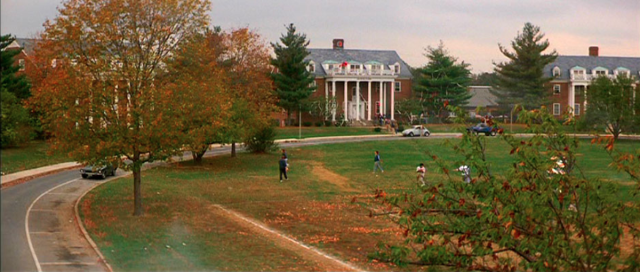
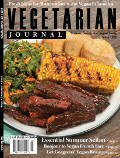
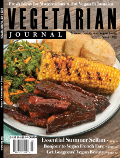
Living in a Frat House on a university campus can be a lot of fun; however, sometimes it can be difficult getting veggie food. The recent issue of Vegetarian Journal features an article on how you can work in a positive fashion with a chef preparing food for Frat brothers. In this case, non-veggie individuals were jealous of some of the options being prepared for the one vegetarian living in this particular Frat house.
Create and submit a video relating what you want to tell others
about vegetarianism/veganism.
Some possible topics: food, nutrition, your feelings about
veganism/vegetarianism, water usage and vegetarianism, veganism and animal
rights, or other vegan topics which appeal to you. Humor and feelings are
appreciated. All videos should be positive, not be critical of anyone, and not
include any footage of animal cruelty. You may submit a video you have already
made.
Aspects of judging include accuracy and judges wanting to
share the video with others. Entrants give permission to The Vegetarian
Resource Group to post and share the video, to link to and from the video, and
share the video with the media. Deadline to enter this year is July 15, 2018.
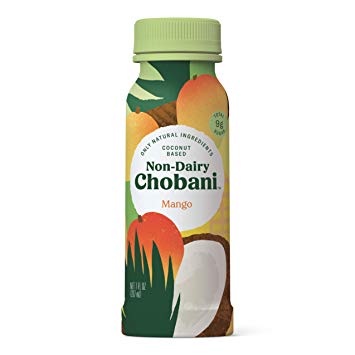
We followed up with Chobani by email and phone about their non-dairy yogurt with these questions:
Has the cane sugar in your non-dairy products been filtered through cow bone char?
Are your cultures microbial? Have they been genetically modified in any way? If they have, is there any animal- or dairy-derived genetic material that’s been incorporated into the microbial genome?
Are there any animal-or milk-derived ingredients (like lactose) or sugar that has been processed through cow bone char used in the growth media for your microbial cultures? If you are unable to tell us what is in the media could you tell us what is NOT in it?
The VRG spoke several times with the Community Loyalty Team at Chobani between February and May 2019.
We learned that in the non-dairy yogurt products:
•Cane sugar is the type of sugar used. (In other products, Chobani previously used evaporated cane juice which, incidentally, is never processed through cow bone char.)
•The cane sugar in the Strawberry and Mango drinkable Non-Dairy Chobani products has been processed through cow bone char. (There are 4 drinkable products and 5 spoonable ones made with non-dairy coconut purée.)
•In all other non-dairy products, the cane sugar has not been processed through cow bone char.
Regarding the cultures, Chobani employees told us that they use “all non-GMO ingredients in vegetable cultures.”
Because the phrase is vague, we rephrased the question by asking them if they use bacterial cultures grown on vegetable-based media.
They confirmed this and added that “lactose is not present in the media.”
The VRG received this email:
“Our food science team confirms that the live and active cultures found in Non-Dairy Chobani products are suitable for vegetarian diets…Chobani has rejected the use of genetically modified organisms, including in our yogurt cultures. Due to the competitive nature of the yogurt industry, our team declines to comment on the specific materials and processes used in the maintenance and proliferation of our live and active culture strains.”
Because the meaning of the term “vegetarian” varies among companies as well as people, The VRG followed up with a phone call for more clarification. We asked specifically if cane sugar or corn served as the carbohydrate source in the culture medium.
We were told that Chobani doesn’t call any of their products “vegan” as that term is not legally defined.
The VRG agreed and added that since the term “vegetarian” is also legally undefined, we ask companies for ingredient information or at least information on what is not present.
Then our readers can decide for themselves whether a food product meets their definition of “vegetarian” or “vegan.”
Again, Chobani declined to tell us the component(s) of its culture medium and also would not say if cane sugar or corn is absent from it.
The VRG recommends that consumers who want to know more, especially vegans and/or people sensitive to corn-derived ingredients (which are common in culture media), contact Chobani for more information.
The contents of this posting, our website, and our other publications, including Vegetarian Journal, are not intended to provide personal medical advice. Medical advice should be obtained from a qualified health professional. We often depend on product and ingredient information from company statements. It is impossible to be 100% sure about a statement, info can change, people have different views, and mistakes can be made. Please use your best judgment about whether a product is suitable for you. To be sure, do further research or confirmation on your own.
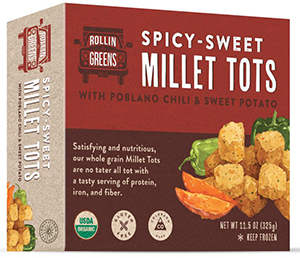
Vegetarian Journal includes the column Veggie Bits where we evaluate new vegan products. Recently we reviewed items including Millet Tots from Rollin Greens. Our write-up states:
“Want a tasty alternative to tater tots? Try Millet Tots in
three flavors: Original: With Sea Salt & Onion Flake; Italian Herb: With
Garlic & Basil; and Spicy-Sweet: With Poblano Chili & Sweet Potato.
They seem too indulgent to be nutritious — but with all organic ingredients and
a whole-grain millet base, they’re a perfect substitute for tater tots. We
especially loved the Italian Herb and Spicy-Sweet varieties. All would be even
more delicious dipped in tomato sauce, vegan ranch dressing, agave mustard, or
vegan tartar sauce. The Spicy-Sweet Millet Tots are delicious by themselves,
with a smooth texture and a spicy kick. Kids will love the Italian and Original
flavors. They can do double duty as delicious gluten-free croutons. Find them
in the freezers of natural foods stores for about $5-6. See: www.rollingreens.com.”
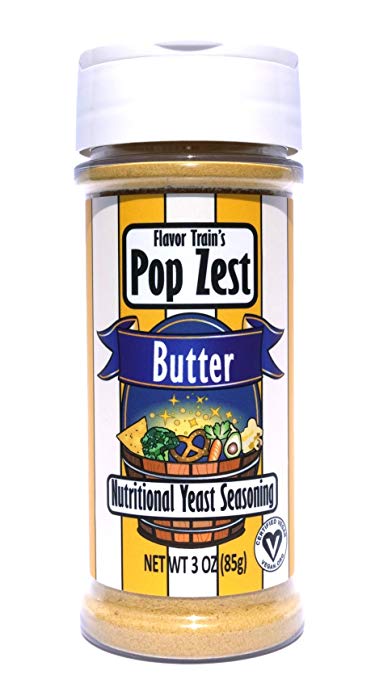
We also tasted Flavor Train’s Pop Zest Nutritional Yeast
Seasoning and said the following:
“Flavor Train’s Pop Zest Nutritional Yeast Seasoning is the
perfect addition to popcorn, salads, pasta, anything! As a lover of nutritional
yeast, I didn’t think you could get better than that cheesy goodness, but I’ve
been proven wrong. There are three flavors in the Pop Zest family, each with
their own unique taste. Olive Oil and Herb is like a classic Italian seasoning,
Artisan Cheese is a buildable cheese flavor, and Butter is the smooth buttery
taste you lust for, without the overly greasy texture of vegan butter. We
recommend adding a sprinkle of Artisan Cheese and breadcrumbs to baked mac and
cheese, or adding Olive Oil and Herb to steamed veggies and pasta. And the best
part — they’re fortified with vitamin B, including B12, so you get between
30-35% of your daily requirement with 1 teaspoon! The seasonings are also
low-sodium, making them okay to add to pre-salted popcorn. These seasonings can
be found online at popzest.com/shop
and via Amazon and Vegan Essentials. You can also find them in stores such as
Down to Earth Markets in Hawaii, Lucky’s Market, Clark’s Nutrition, Lassens
Natural Foods, and Alfalfa’s Market.”
You can read the entire column here: https://www.vrg.org/journal/vj2019issue2/2019_issue2_veggie_bits.php
The most recent Vegetarian Journal takes a look at recent scientific literature on veggie diets. One topic covered is taking Vitamin B12 daily or weekly. Here’s our write-up on this study:
Vitamin B12 recommendations from
many vegan groups, including The Vegetarian Resource Group, are based on
calculating how much vitamin B12 is likely to be absorbed from supplements
containing different amounts of vitamin B12. For example, in 2015 we said,
“About 5% of the vitamin B12 in a supplement containing 25 mcg of vitamin
B12 is absorbed. A lesser amount, 1% or less of the vitamin B12 in a supplement
containing more than 100 micrograms of vitamin B12, is absorbed.”1
A recent study examines whether these theoretical absorption rates actually
apply in vegans and non-vegan vegetarians.
In this study,2 36
vegetarian (including vegan) adults who were marginally deficient in vitamin
B12 based on their blood vitamin B12 levels, were randomly divided into two
groups. During the 12 week study period, one group took 50 micrograms of
vitamin B12 daily and the other group took 2,000 micrograms of vitamin B12 once
a week. Blood vitamin B12 was rechecked throughout the 12 weeks. Both groups’
blood vitamin B12 levels improved as did other indicators of vitamin B12 status
so that, at the end of the study, they were no longer considered to be
deficient. These results support recommendations to take vitamin B12
supplements either daily if you are using a lower dose (25-100 micrograms) or
weekly for a higher dose of 2000 micrograms. One advantage of using a lower
dose daily could be that you’re less likely to forget to take your supplement
if it is part of your daily routine. On the other hand, taking a larger dose
one day each week, perhaps first thing Monday morning, may be easier for some
people to remember to do. In any case, it’s important to have a regular source
of vitamin B12, whether fortified food or supplement.
2 Del Bo C, Riso P, Gardana C, et
al. 2018. Effect of two different sublingual dosages of vitamin B12 on
cobalamin nutritional status in vegans and vegetarians with a marginal
deficiency: A randomized controlled trial. Clin Nutr.
pii: S0261-5614(18)30071-2. [Epub ahead of print].
The most recent Vegetarian Journal features an article by Laura McGuiness titled “Essential Summer Seitan.” You’ll find recipes for Buffalo Fried Chick-Un, Seitan BBQ Strips, Shredded Chick-Un Enchiladas, Honee-Glazed Roast, and Maple Breakfast Sausage.
– How do you help your
child (if necessary) when they are teething? One suggestion we have is to slice
a bagel in half, freeze it, and give it to older children when teething.
– Do any of you send your kids to summer camp? If so, how do
you manage the camp food and vegan options? Parents responses included: Do you know about YEA Camp – Youth Empowered Action Camp? All Vegan
– for teens. It changed my daughter’s life! The Camp Kindness program at
Catskill Animal Sanctuary is 100% vegan!
– A vegan diet can still be high in sugar. Any thoughts
about this?
Plus more!
https://www.facebook.com/groups/VRGparentsandkids/ is intended to be a group that offers support for
families raising children on vegan diets and for vegan kids. We envision it as
a place to get advice about a wide-variety of topics: pregnancy, birthday
parties, school lunches, Halloween, non-leather apparel, cruelty-free products,
summer camps, and more. Please use it as a place to share your wisdom, seek
advice, or just find a sympathetic ear. The goal is to offer support.
Consequently, any profane, defamatory, offensive,
or violent language will be removed. Feel free to disagree, but do so
respectfully. Hateful or discriminatory comments regarding race, ethnicity,
religion, gender, disability, sexual orientation, or political beliefs will not
be tolerated. We expect that posts should relate to vegan diets and lifestyles.
The Vegetarian Resource Group reserves the right to monitor all content and ban
any user who posts in violation of the above rules, any law or regulation,
SPAM, or anything otherwise off topic.
Please share this information
with any veggie families that you know! Thanks.
Vegetarian Journal features a column called Nutrition Hotline, where we answer readers’ questions related to vegan diets. The latest issue offers dietary advice related to sports-related concussions.
Vegetarian Resource Group Nutrition Advisor Reed Mangels,
PhD, RD, starts off by stating that “General recommendations to eat well and to
drink fluids for hydration apply when recovering from a concussion. Limiting or
avoiding caffeinated drinks like soft drinks, coffee, and tea can make it easier
to get needed rest.” Reed then goes on to say, “Other suggestions are based on
limited research and are only speculative. Creatine (also known as creatine
monohydrate) is an amino acid made by our body and found in meat and fish. The
International Olympic Committee’s (IOC) consensus statement about supplement use
mentions that creatine supplements are associated with decreased damage and
improved recovery post-concussion … Vegan creatine supplements are available
from Vegan Essentials and other online retailers.”
The Vegetarian Resource Group is an activist non-profit
organization that does outreach all-year-long. For example, VRG tables at
different events throughout the USA and also sends literature free of charge to
other groups/individuals doing educational activities in schools, hospitals,
camps, restaurants, libraries, offices, etc. Our ability to continue doing this
depends on people like you! Your donations allow us to promote the vegan
message whenever we’re called upon for assistance. Please consider becoming a
monthly or quarterly donor to The Vegetarian Resource Group.
Thanks so much for your support. You can become a monthly or
quarterly donor online here: vrg.org/donate
The Vegetarian Resource Group (VRG) is a non-profit organization dedicated to educating the public on veganism and the interrelated issues of health, nutrition, ecology, ethics, and world hunger. We have been helping health professionals, food services, businesses, educators, students, vegans, and vegetarians since 1982. In addition to publishing the Vegan Journal, VRG produces and sells a number of books.
Sign up for our newsletter to receive recipes, ingredient information, reviews of new products, announcements of new books, free samples of products, and other VRG materials.