The Vegetarian Resource Group Blog

VEGAN FOODS FOR NON-VEGETARIAN 10-12 YEAR OLDS

Posted on October 17, 2016 by The VRG Blog Editor

file0001063723859

By Whitney Gray, VRG intern

Looking back on my own childhood, I had no clue what a vegan or even a vegetarian was. I just ate what my parents gave me, which wasn’t particularly healthy and rarely vegan, save for some unadulterated fruit or accidentally vegan junk food (sorry mom, love you). I find my little cousins who I currently live with to have similar taste buds to what I had at their ages, which are 10-12. They’re three boys with huge appetites and they love fast food, cookies, chips, and all the mac and cheese they can fit in their little bellies. But to my surprise, one has been taking an interest in my meals, asking why I eat differently, “What’s the green stuff?,” and “Does it still taste good?” With one happy accident, I got them to try a healthy meal, and they actually loved it.

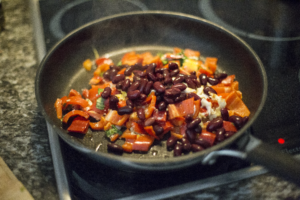
I decided to make a stir-fry the other day to use up some ingredients I had lying around. My mom and I had bought tons of quinoa a few months back, and discovered that we didn’t like eating it on its own after a few nights of force feeding ourselves and willing it to be delicious. To use it all up, I usually mix about a cup with two cups of jasmine rice and cook it all together. I also had some pre- cooked, marinated tempeh and fresh broccoli in the fridge that I had to use up before it went bad. I threw in a stir-fry vegetable mix from the freezer for some extra veggies. I cooked the mixture in a just a bit of coconut oil and of course added soy sauce and an array of spices until I was satisfied with the flavor.

Right when I was dishing up a portion for myself, one of the boys came in the kitchen begging if he could have some as well. They’re accustomed to eating Chinese takeout at least once a week, so when they see rice, they just assume it’s close enough to what they’re used to. I let him try just about a spoonful and his big eyes lit up. The twins, who are 10, eat like grown men so they ended eating almost all of my stir-fry, but I was over the moon. They kept raving about how delicious it was and one even called it the best rice he ever had. My aunt also had a plate and thoroughly enjoyed it. What was most amusing, however, was that no one noticed the quinoa. The jasmine rice was light brown from the soy sauce, so the color disguised the little quinoa grains mixed throughout the dish. The tempeh didn’t go by unnoticed, but the boys just thought it was meat, even though they know I don’t eat or cook any. One even said, “This could use some meat,” and smirked in my direction just to annoy me and then another chimed in with “The meat is right here, see,” while pointing his fork at a tiny cube of tempeh.

I sat grinning and watching as my family devoured a meal full of new ingredients with no complaints. The thing that people don’t realize about vegan cooking is that it isn’t very different from using animal products. No one boils a chicken breast and just eats it plain, or at least I hope you wouldn’t put yourself through that. If anything, people will at least add salt and pepper to their meals and those with more cooking experiences know how to play around with a variety of herbs and spices to add more flavor. You can take any plant food and create a delicious meal with the right seasoning and cooking methods. I was so happy to show the kids that no, not everything Cousin Whitney eats is gross or weird. It’s just another version of what they’re used to.

Swedish Vegan Recipes

Posted on October 14, 2016 by The VRG Blog Editor

ka%cc%8alpudding-photo

swedish-photo

By Petra Cavini, VRG volunteer from Sweden

Swedish Kroppkakor (Swedish Filled Dumplings)
(Serves 4)

1 pound potatoes
4 Tablespoon powdered egg replacer
4 Tablespoons water
¾ cup potato or durum flour
½ teaspoon salt

The filling
1 onion
9 ounces smoked tofu
3 drops of liquid smoke
2 teaspoons oil
7 ounces soy crumbles
2 teaspoons ground allspice
1 teaspoon ground white pepper
Salt, to taste
2 teaspoons oil

For serving
Cranberry jam or jelly
Melted vegan butter (optional)

Peel and cook the potatoes. Let them cool. Mix egg replacer with water. Mash the potatoes and add the egg replacer mixture, flour, and salt. Knead the dough with your hands until it becomes well mixed.

Mince the onion and dice the tofu into small pieces. Add liquid smoke and fry in a pan with 2 teaspoons oil. Place into a separate bowl.

Mix the soy crumbles with all the spices and fry in a pan with 2 teaspoons oil. Place into a separate bowl.

Roll the potato dough into a big roll. Slice it in about 20 even pieces. Gently roll out one piece of dough. Place it on to your hand and add your filling in the middle. Seal the edges together so no filling can get out. Roll into a ball. Repeat this step.

Boil water in a large saucepan and add some salt. Carefully place the kroppkakor into the saucepan, one layer at a time. Cook for about 10-15 minutes. Remove kroppkakor from saucepan.

Serve with cranberry jam or jelly and melted vegan butter.

Swedish Vegan Kålpudding (Swedish Vegan Cabbage Casserole)
(Serves 4)

The kålpudding
1/2 green cabbage
2 ounces vegan butter or margarine
1 teaspoon ground allspice
1 pinch of white pepper
1 pinch nutmeg
Salt, to taste
1 Tablespoon soy milk
1 teaspoon powdered egg replacer
1 Tablespoon water
9 ounces soy crumbles

Cream sauce
2 cups blended silken tofu
2-3 teaspoons soy sauce
2-3 teaspoons cornmeal

Preheat oven to 350 degrees.

Coarsely chop the cabbage and rinse. Cook it slowly in the vegan butter or margarine over a low heat. Add all the spices and salt. When the cabbage starts to become tender, add the soy milk. Let it reduce until the cabbage absorbs the milk. Remove the cabbage from the stove and let cool.

Mix the powdered egg replacer with the water in a bowl. Add the soy crumbles. Pour over the cabbage and stir it all together.

Place the cabbage and soy crumbles mixture into a 10-inch square non-stick baking pan. Press the mixture until it becomes compact and stable. Bake for 30 minutes at 350 degrees.

Place all your cream sauce ingredients into a covered saucepan. Let it cook over low heat until the sauce becomes perfectly thick and creamy. Serve sauce over the cabbage.

Chocolate Coconut Cake (Gluten-free)

Posted on October 13, 2016 by The VRG Blog Editor

chocolate-cake

By Alicia Hückmann, VRG intern visiting from Germany

For the batter:
1 cup sugar
1¼ cups Edward and Sons’ banana flour
3 tsp baking powder
3 Tbsp cocoa
½ tsp salt
1-1/3 cups plant milk (plain, chocolate, or vanilla flavored)
1/3 cup water
1 Tbsp vinegar
1 Tbsp vanilla extract

For the cream:
13.5 oz can Edward and Sons’ heavy coconut cream (refrigerated)
2-4 Tbsp cocoa powder

Mix all dry ingredients for the batter (sugar, flour, baking powder, cocoa, and salt) in a bowl, then add plant milk, water, vinegar, and vanilla. Stir until smooth.

Fill an 8-inch round baking dish with about 2/3 of the batter and bake it for 25-30 minutes at 350 degrees. Repeat with the remaining 1/3 batter in a separate 8-inch round baking dish (baking time: 20-25 minutes).

In the meantime, take the coconut cream out of your refrigerator. Place the solid coconut cream in a bowl and discard the remaining liquid. Add 2-4 Tbsp cocoa powder (depending on whether you prefer more of a coconut or chocolate flavor). Whip the cream until it’s smooth and has an even brown color. Once the 2/3 cake base has cooled down, spread the cream on top using a knife. Crumble the remaining 1/3 and use the crumbs to cover the cream.

Visit The Vegetarian Resource Group’s Booth at the Academy of Nutrition and Dietetics

Posted on October 13, 2016 by The VRG Blog Editor

anda

Visit The Vegetarian Resource Group’s Booth at the Academy of Nutrition and Dietetics Conference in Boston, MA Sunday, October 16, 2016 – Tuesday, October 18, 2016

If you’re a dietitian and attending the Academy of Nutrition and Dietetics Conference in Boston, MA, please stop by The Vegetarian Resource Group’s booth and introduce yourself. We’d love to meet you!

Also, VRG will be holding a vegan dinner in Boston on Sunday, October 16, 2016, at 6 PM. You can sign up for this event at the VRG booth on Sunday.

Visit Veggie Crust & Nice Cream in Somerville, Massachusetts!

Posted on October 12, 2016 by The VRG Blog Editor

14095801_249484932112733_8040502731736433124_n

Crusts are available as thin whole wheat at this pizzeria/ice cream vegetarian establishment. You can build your own pizza from 6 different sauces and 15 toppings. Most of the specialty pizzas have a vegan option: for example, the spicy Cauliflower Manchurian or the Curry Leaf Pesto Portobello can be constructed with vegan cheese instead of dairy-based cheese. They also have Vegan Alfredo Sauce as an option. And you can try Vegan Bolognese Penne as well. A fully stocked juice bar offers a wide selection. You can finish your meal with vegan “Nice Dream” (coconut-based) for dessert.

Veggie Crust & Nice Cream is located at 445 Somerville Ave., Somerville, MA 02143. They can be reached at (617) 764-4605. They are open for lunch and dinner daily.

Be sure to visit their Facebook page: www.facebook.com/pureveggiee
and their website: http://www.vegcrust.com

AMERICAN VEGAN PRODUCTS IN GERMANY

Posted on October 11, 2016 by The VRG Blog Editor

tofurky-deli-slices-peppered-package-1

By Alicia Hückmann, intern visiting from Germany

As vegan foods become more popular around the world, these foods are increasingly being exported and imported to different countries. Are there different tastes internationally? What does a German think of an American product now available in her country, such as Tofurky? Of course, remember that tastes everywhere, even in the same family, differ dramatically.

Review

I tasted the following products:

– peppered deli slices

– bologna deli slices

– pepperoni deli slices

The reason why I am only going to review cold cuts is because they are the only meat alternatives I consume on a regular basis. While I certainly tasted enough brands and flavors to do a knowledgeable review on Tofurky’s deli slices, I lack experience with other types of products.

Positive

1. Taste

Tofu- and soy-based products are among the best when it comes to vegan cold cuts in my opinion. Thus it didn’t come as a surprise that I enjoyed Tofurky’s deli slices as much as I did. I have to admit, however, that they didn’t beat my personal favorite, the plant-oil based cold cuts by Gut Wudelstein. Even though I really like Tofurky’s use and balance of spices, they don’t always neutralize the slices’ natural tofu flavor (especially in mild flavors like bologna). The spicy slices (peppered and pepperoni) are definitely among my all time top 5 vegan cold cuts, though. Not only taste-wise but also because they are a great source for protein and iron among others. Furthermore, they seem much healthier than the aforementioned cold cuts that mostly consist of fat and oil.

2. Freshness

While other cold cuts are usually dried out after three days and make pretty good crackers after seven, this was not the case for Tofurky’s deli slices. Although it takes me about a week to finish one package, they remain moist and soft until the very last day – only the edges harden a little after a while. At first I thought this was only due to the fact that they come in a block of slices and are therefore less likely to transpire but changed my mind when I witnessed how two leftover slices (bologna style) still tasted relatively fresh after laying in the fridge for another three days.

DIFFERENCES

1. texture

As I am generally a big fan of Tofurky’s deli slices, all suggestions I have to say are really minor issues and wouldn’t actually prevent me from buying the products. One of them is the texture which could be a little more tender in my opinion. For me, the perfect cold cuts are the ones that you can bite through easily (the pepperoni come very close). I often eat a little while working on my computer or reading, so having a snack that doesn’t make make my fingers greasy and that doesn’t need to be held in two hands is very convenient. When putting a deli slice on a slice of bread, however, I always have to hold on to it with both hands in order not to pull it off with my teeth.

2. Packaging

While I appreciate the fact that Tofurky uses less plastic than many other brands for their cold cuts, I sometimes get a little frustrated due to the way they are sealed. Opening the package can be a bit of a struggle because there is only little space between the tightly sealed bits of the package and the block of slices. This makes it literally impossible to tear it open and also very difficult to cut it open using a knife or even a pair of scissors (which will most likely come into contact with the cold cuts). Once it is open, I have to take out the whole block in order to grab a slice, which I wouldn’t mind if putting it back were less of a challenge due to the aforementioned space issue. Furthermore, the package cannot be resealed which means that the products’ smell will spread inside the fridge unless it is put into a second or different plastic bag (not exactly an environmentally friendly solution).

German taste buds and meat alternatives

General information and recent developments:

The perfect meat alternatives for Germans

A survey conducted by the German Vegetarian Union (Vebu) in 2012 reported that only 15% of all respondents think that meat alternatives should look like meat. 70% on the other hand prefer meat alternatives that have a different name than the products they imitate or are inspired by and another 70% don’t care if meat substitutes taste like meat at all. On the other hand, many consumers seem to attach great importance to organic labeling. 44% think that all meat substitutes should be organic, 26% at least partly agree to this statement, and only 22% attach little to no importance to organic labeling. In general, the majority of all people interviewed was very satisfied with the average quality, taste, texture, and variety of products available on the food market.

Tofu and Soy products

Tofu and Tempeh are the most popular bases for meat alternatives. In the aforementioned survey, these soy products make up about 35% of the average respondent’s consumption. I have the impression, however, that some German vegans, vegetarians, and other consumers are cutting down on soy products at the moment. The reason for this are studies suggesting that consuming “too much” soy can lead to a higher risk of hormone-related types of cancer due to the amount of phytoestrogens it contains. And even though many don’t know what “too much” means, they are still inspired by the headlines to cut down on soy or give it up altogether. As I already suffer from hypothyroidism and have relatives who were diagnosed with breast cancer, I was tempted to do the very same until I did a little more research on the many benefits of soy as well as the exact meaning of “too much.” In order to demystify soy and fully restore its good reputation, more companies need to highlight and advertise its advantages (great source for protein and iron, environmental friendly, etc.).

For more info, see http://www.vrg.org/journal/vj2003issue3/2003_issue3_hotline.php

Major brands might be unhealthy

Another headline that is likely to cause changes on the market for meat alternatives relates to the most recent reviews by Stiftung Warentest (a German consumer organization). Out of 20 products that were tested, 6 contained too high amounts of pollutants – e.g. 400 mg mineral oil/“mosh” per kg in Rügenwalder Mühle Schnitzel. This is one of the highest concentrations of mosh in food products that has ever been measured by the institute. Other products that have been reported to contain mosh are meat alternatives by Alnatura, Netto, Alberts, Viana, and Taifun (20-60 mg each), all of which are commercially successful brands carried by many major supermarket chains. Some supermarkets drew consequences shortly after the test results were published, like the chain REWE, which is going to remove the product “Naturgut Bio-Veggie-Schnitzel” from its shelves. All companies accused of pollution tried to explain the findings by suggesting that white mineral oils (which are almost identical to mosh but considered to be harmless) are to blame. Rügenwalder Mühle announced that they would stop putting them into their products nevertheless.

Mosh is a problematic (accidental) ingredient that affects the food market as a whole. It often finds its way into products if harvested crops come in contact with lubricating oil or if products are transported or packaged in recycled carton boxes. According to foodwatch, rice, noodles, and cereals are among the most polluted products (31 out of 42 tested products contained this type of mineral oil).

Stiftung Warentest did not only criticize the products’ pollution with mosh but also their composition. Only 2 out of 20 products were described as well-balanced in regard to their nutrients. Some products, on the other hand, contained more fat than the recommended amount for a main course (100g sausages by Meica) or 2/3 of the daily recommended sodium intake (100g burgers by Berief). Both of the aforementioned products did also fairly bad concerning environmental friendliness. Other brands have been revealed to use soy from areas that contribute to deforestation or partially genetically modified soy. Only two companies reported that they exclusively use soy grown within the EU.

Stiftung Warentest focused on the category of vegetarian meat alternatives in this particular study. In previous studies, they analyzed the quality of other products including meat. In one of these studies (mincemeat testing in 2015), the conductors found out that every second sample contained E.coli bacteria and antibiotic-resistant germs. One product contained salmonella.

It is also important to bear in mind that Stiftung Warentest only reviews a very small part of the overall market. They focus on products that are sold in or even produced by discounters as well as very popular brands. The majority of these brands are not vegetarian/vegan-only labels but in fact owned by meat producers (like Ruegenwalder Muehle – one of Germany’s major poultry producers). Several of my favorite foods from vegetarian companies were not reviewed.

The contents of this posting, website, and our other publications, including Vegetarian Journal, are not intended to provide personal medical advice. Medical advice should be obtained from a qualified health professional. We often depend on product and ingredient information from company statements. It is impossible to be 100% sure about a statement, info can change, people have different views, and mistakes can be made. Please use your best judgment about whether a product is suitable for you. To be sure, do further research or confirmation on your own.

VEGDINING.COM invites you to celebrate World Vegetarian Month (October)

Posted on October 11, 2016 by The VRG Blog Editor

vegetarian-month-final

Our friends at VegDining.com invite you to celebrate World Vegetarian Month (October). Visit one or more of your favorite veg restaurants during October and for each fully veg restaurant you visit, submit a mini-review (3 sentences or more) on VegDining.com. You’ll be entered to win a veg prize, including a $100 Vegetarian Resource Group gift certificate! Last date to enter Oct 31, 2016 — more details and contest entry at http://vegdining.com/Go.cfm?id=Review

Traveling Ireland as a Vegan

Posted on October 10, 2016 by The VRG Blog Editor

irish-flag

By Alicia Hückmann, intern visiting from Germany

When I decided to move to Dublin for two months for an internship, I had no idea what to expect in regard to food. Although I had already been to Ireland a few years before, it was my first trip to this country as a vegan. The only thing I remembered from going shopping back then was how exorbitant the prices for groceries were (in comparison to German standards) – so at least I was prepared to spend a fortune on food. Upon my arrival, I soon had to find out that Ireland is anything but a vegan nation. Not very surprising considering the fact that their farms come frighteningly close to these romanticized illustrations of picture perfect farms, grinning cows on milk cartons or packaged meat on first sight. I can actually understand why some people wouldn’t immediately think of animal cruelty when seeing herds of outdoor sheep and cows grazing on the idyllic meadows of Eire. Then again, I never noticed any pigs, male baby chicks or calves jumping around happily, so I came to the conclusion that being vegan in Ireland was still a very good idea.

While vegan labels and meat alternatives were a rarity in many of the common grocery stores I went shopping at (I remember going to Tesco, Aldi, Lidl, Gala, and SPAR on a regular basis), products directed at lactose intolerant people are much more common – even the smallest supermarkets had at least one type of plant milk! This and porridge basically saved my breakfast. Porridge (like oatmeal) does not require much time and effort and can be prepared on a stove or in a microwave within a few minutes. I usually added some fruits, berries, and cinnamon for a richer flavor.

As my workplace’s cafeteria only offered non-vegan options, I had to bring my own lunch box. This mostly consisted of some bread, hummus, vegetable sticks, and fruit. At home (I lived in a place that had a fully equipped kitchen), my meals usually contained frozen vegetables, rice, beans, noodles, or lentils. These were not only some of the products available most easily but also some of the cheapest. In return, I treated myself to Dublin’s relatively pricey vegan options at restaurants (like a bar that offered vegan pizza – turned out to be a regular veggie pizza just without the cheese).

Depending on how you choose to travel Ireland, cooking your own meals can be really simple. Hostels are probably the most convenient type of accommodation for young adults and much, much more common all across Europe than they are in the USA. As a low-budged traveler, hostel dorms are your best friends – I booked in advance and managed to get a bed in Galway, Belfast, and Cork for €10-15 per night in a room that I shared with 5-9 other people. Be warned, however – the less you pay, the more likely you will be to require high-quality earplugs at night! The truly great thing about hostels (for vegans in particular) is that they usually have a fully equipped kitchen or at least basic kitchen tools that you can use for free. You’ll never have to worry about finding a suitable place to dine out and quite frankly, hostel kitchens are one of the best places to find new friends! In my experience, the smaller a hostel is the cleaner its facilities are but I would always check reviews on websites like hostelworld, just to be sure.

While some hostels don’t have an age limit, others won’t accept people older than 35. In that case (or if you are simply not a fan of these places), you will have to find a different kind of accommodation. Airbnb is a popular alternative and definitely a great solution if you are planning on staying somewhere on the countryside.

The biggest mistake I made when going out to eat was not joining Dublin’s vegan Facebook group much earlier. Many of its members are not only long-term vegans but have been living in Ireland for most of or all their lives. They are absolute experts when it comes to helpful insiders’ tips for vegan tourists. Here, I also learned about a vegetarian restaurant called Cornucopia, which quickly became one of my favorite places in the country (http://www.cornucopia.ie/)

If you plan on going to Belfast, by the way, I promise you will cry sweet tears of vegan happiness. Like the rest of the United Kingdom, this city is a lot more vegan-friendly than the Republic of Ireland in my opinion. In fact, one of the first posters I came across in Belfast advertised a vegan festival! Besides, I also found a lot more plant-based products in regular supermarkets.

All in all, Ireland is a beautiful country that is definitely worth the visit if you are ready to make a few compromises. And since Guinness has recently switched to a vegan recipe, you can always just drown your frustration in some good, bitter Irish beer if you have to.

Sedona VegFest 2017

Posted on October 10, 2016 by The VRG Blog Editor

https-%2f%2fcdn-evbuc-com%2fimages%2f24560384%2f184069311481%2f1%2foriginal

Healthy World Sedona (an affiliated member organization of PlantPure Nation) announces the first ever vegfest in Sedona, AZ, next January 14-15, 2017. An amazing program of presenters is on tap, including keynotes from Dr. Joel Fuhrman and Dr. Richard Oppenlander. Celebrity chefs Jason Wyrick and Sedona’s own Lisa Dahl will do cooking demos, and there will be plenty of exhibitors providing the latest information, products, and services promoting a whole-food, plant-based diet and lifestyle. And it’s in the beautiful red rock country of Sedona, world-renowned as a magical place for personal healing and renewal.

Sedona VegFest 2017 will be a true feast—for the eyes, the mind, the body, and the soul. Information and registration at healthyworldsedona.com/sedona-vegfest-2017.

VEGAN HALLOWEEN TREATS

Posted on October 07, 2016 by The VRG Blog Editor

file5761288651335

Are you looking for some vegan-friendly items to handout to children on Halloween? If so, here are some suggestions:

Naked and Chocolate Covered Vegan Caramels
See: https://jjssweets.com/

OCHO Mini Coconut Bars
See: http://www.ochocandy.com/product-category/pouches/

Sensible Portions Ghosts & Bats Veggie Chips
See: http://www.sensibleportions.com/en/products/ghosts-bats-garden-veggiechips/

Sjaak’s Organic Chocolates
https://sjaaks.com/categories/show/Halloween+

Surf Sweets Organic Fruity Bears – Mini Bags
See: http://www.naturalcandystore.com/product/surf-sweets-organic-fruity-bears-mini-bags/vegan-candy

Yummy Earth Organic Lollipops
See: http://yummyearth.com/

You can also handout small bags of pretzels, popcorn, or baked chips.

  • Donate

  • Subscribe to the blog by RSS

  • VRG-NEWS

    Sign up for our newsletter to receive recipes, ingredient information, reviews of new products, announcements of new books, free samples of products, and other VRG materials.

    Your E-mail address:
    Your Name (optional):


↑ Top