The Vegetarian Resource Group Blog

Sedona VegFest 2017

Posted on October 10, 2016 by The VRG Blog Editor

https-%2f%2fcdn-evbuc-com%2fimages%2f24560384%2f184069311481%2f1%2foriginal

Healthy World Sedona (an affiliated member organization of PlantPure Nation) announces the first ever vegfest in Sedona, AZ, next January 14-15, 2017. An amazing program of presenters is on tap, including keynotes from Dr. Joel Fuhrman and Dr. Richard Oppenlander. Celebrity chefs Jason Wyrick and Sedona’s own Lisa Dahl will do cooking demos, and there will be plenty of exhibitors providing the latest information, products, and services promoting a whole-food, plant-based diet and lifestyle. And it’s in the beautiful red rock country of Sedona, world-renowned as a magical place for personal healing and renewal.

Sedona VegFest 2017 will be a true feast—for the eyes, the mind, the body, and the soul. Information and registration at healthyworldsedona.com/sedona-vegfest-2017.

VEGAN HALLOWEEN TREATS

Posted on October 07, 2016 by The VRG Blog Editor

file5761288651335

Are you looking for some vegan-friendly items to handout to children on Halloween? If so, here are some suggestions:

Naked and Chocolate Covered Vegan Caramels
See: https://jjssweets.com/

OCHO Mini Coconut Bars
See: http://www.ochocandy.com/product-category/pouches/

Sensible Portions Ghosts & Bats Veggie Chips
See: http://www.sensibleportions.com/en/products/ghosts-bats-garden-veggiechips/

Sjaak’s Organic Chocolates
https://sjaaks.com/categories/show/Halloween+

Surf Sweets Organic Fruity Bears – Mini Bags
See: http://www.naturalcandystore.com/product/surf-sweets-organic-fruity-bears-mini-bags/vegan-candy

Yummy Earth Organic Lollipops
See: http://yummyearth.com/

You can also handout small bags of pretzels, popcorn, or baked chips.

Please Show Your Support for all the Good Work The Vegetarian Resource Group Does Year-Round by Donating to VRG Through the Combined Federal Charity Campaign or other Workplace Campaign

Posted on October 07, 2016 by The VRG Blog Editor


2016 has been a very productive year so far for The Vegetarian Resource Group. Here’s a sampling of some of our accomplishments and outreach:

-Nancy Berkoff’s Vegan in Volume published by VRG has been distributed to thousands of food service personnel
in different settings. This encourages chefs to serve more vegan food options in universities, hospitals, employee cafeterias, nursing homes, and other places. Nancy also developed vegan recipes for Our Daily Bread in Baltimore, which serves over 700 meals per day to homeless and low income individuals. About 10% requested veggie meals. VRG interns prepared and donated 9 foodservice size trays of vegan food using Nancy’s recipes.

-We continue to work with numerous High School and College interns in our Baltimore office including three future Registered Dietitians and a student visiting from Germany. VRG Nutrition Advisor Reed Mangels, PhD, RD, mentors those interns who are interested in pursuing a career in nutrition. VRG staff also works with students that are majoring in English, Journalism, Business, and other subjects. These students are the future of the vegan movement and we should all be excited about what they will bring to the cause once they graduate.

-The Vegetarian Resource Group assisted media (print, web, radio, tv, etc.) including Family Circle magazine for an article on children who decide to go veggie; NPR member station KUT in Austin, TX about the public’s increased interest in vegan diets and PBS 8 in Phoenix Arizona about vegan options for Thanksgiving; Consumer Report on Health about reducing meat for health benefits; Dr. Don Radio Show about veggie pregnancy and lactation; On the Menu, a radio podcast, on the topics of why people go veggie and VRG poll information; Grocerant magazine about what vegans would like to see in the prepared section of grocery stores; and Baltimore Business Journal about the history of The Vegetarian Resource Group.

-VRG has done numerous outreach booths including at the Annual Meeting of the Academy of Nutrition and Dietetics in Boston, MA; GreenFest in Washington, DC; Natural Products Expo East in Baltimore, MD; Taking Action for Animals in VA; Charlottesville and Richmond, VA VegFests; Vegan SoulFest in Baltimore, MD; Albany VegFest in NY; NH Dietetic Meeting in Concord, NH; Veggie Pride Parade in NYC; New England VegFest in Worcester, MA; etc. VRG Nutrition Advisor Reed Mangels, PhD, RD, spoke at state dietetic meetings in NH, FL, and AZ and gave a webinar on ‘Vegetarian Diets for Older Adults’ for members of the Healthy Aging Dietetic Practice Group.

-The Vegetarian Resource Group provided vegan handouts free-of-charge for outreach in a wide variety of locations including a box of literature to be shared with a High School women’s basketball team in California; 500 Save our Water Brochures for tabling at an Earth Day event in Houston, TX; several hundred handouts to Animal Advocates of Western New York for a local Health Expo; a thousand brochures for leafletting in NYC; and hundreds of handouts for state dietetic meetings in NH, WA-OR, and NE.

Your support is greatly appreciated! You can also donate directly to VRG at www.vrg.org/donate

Vegan Casseroles for Our Daily Bread

Posted on October 06, 2016 by The VRG Blog Editor

unnamed

By Casey Brown, VRG Intern

Our Daily Bread is a soup kitchen located in Baltimore that provides full meals and additional services to men and women in need in Baltimore City. Local churches, groups, and individuals donate casseroles, and many others volunteer their time in order to allow this program to serve over 600 people every day.

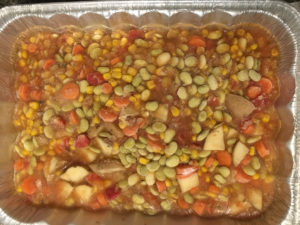
As an intern with VRG, I baked vegan casseroles to donate to Our Daily Bread. The vegan recipes are provided on their website (https://www.catholiccharities-md.org/services/our-daily-bread-hot-meal-program/#790c890569b87ce66), and they are each very easy to make! The first time I made the casseroles, I prepared one of each of the recipes: the Sweet Potato and Black Bean Casserole, the Brunswick Stew, and the Creamy Bean and Potato Casserole with Carrots. This past week, I made two of the Brunswick Stew recipes to donate. Each of the recipes are easy to make, and they use simple ingredients that are often frozen or canned, requiring minimal preparation and cost. While cooking, I would prepare the ingredients for one casserole while another one was in the oven or on the stove cooking. This allowed me to make the most effective use of my time, so I could prepare multiple dishes in one afternoon. Each of the recipes take less than an hour to prepare and cook individually. I thought it was easiest when I made the same recipe twice since I was able to prepare all of the ingredients in bulk, and I was familiar with the cooking process, so it allowed me to prepare them even quicker!

My mom joined me when I was preparing the casseroles since she enjoys cooking and wanted to support the cause as well. She thought these recipes were very easy to make and hopes to continue making them in the future. Since I live about an hour away from Baltimore, I decided to keep the casseroles in my freezer until I was planning to go to the area, which worked out well because they wanted them frozen. When dropping off the dishes, they should be frozen, wrapped in aluminum foil, and clearly labeled with the recipe name.

While we were dropping off the casseroles on both occasions, we were able to visit the center. It was amazing to see the facility and the generous work that they do. Not only do they provide meals to over 600 people everyday, but they also have additional programs to help get people back on their feet and back into employment. The organization is primarily made up of volunteers, and they heavily rely on people’s generosity towards this program. The staff was very appreciative of the vegan dishes since it allowed their visitors to have a wider selection, and it provided a healthier meal option. The volunteer coordinator mentioned the need for more vegetarian options, stating that 200-230 of the 600+ people they serve daily prefer these choices.

If you are looking for a way to get involved in your community or be able to make a difference in someone’s life, then you should consider donating vegan casseroles to a local soup kitchen. The recipes are healthy, low-cost, and very easy to make. It can be a great family activity for you all to cook together, and it will make a huge difference in other’s lives. Even if you are not in the Baltimore area, you should still consider donating these vegan casseroles to soup kitchens near you.

See more about the vegan casseroles on our blog: http://www.vrg.org/blog/2016/03/10/vegan-casseroles-for-our-daily-bread/

VEGETARIAN RESOURCE GROUP VEGAN THAI DINNER IN BOSTON AT MY THAI VEGAN CAFE

Posted on October 05, 2016 by The VRG Blog Editor

o

Sunday, October 16, 2016, 6 PM

The Vegetarian Resource Group will host a vegan Thai dinner at My Thai Vegan Café in Boston on Sunday, October 16, 2016 during the annual meeting of The Academy of Nutrition and Dietetics. Meet VRG advisors Reed Mangels PhD RD, Catherine Conway MS RD, Debra Wasserman, and vegetarian dietitians from around the country. All are welcome.

MENU:

Tom Kha, Thai Coconut Soup with tofu

Thai Mango Salad

Nam Prik Kaeng Kari with tofu (Yellow Curry) and brown rice

Pad See Ew. Wide rice noodles with Chinese broccoli and vegan gluten.

Fruit cocktail for dessert or other fruit

Tea and cold water

This will be a plated sit down dinner.

TO RESERVE: Send $30 person (includes tax and tip) (Under eight is half price) with names of attendees to The Vegetarian Resource Group, P.O. Box 1463, Baltimore, MD 21203.

Call (410) 366-8343.

You can also pay at www.vrg.org/donate and write Boston Dinner in the Comments.

Refunds after September 30th only if your seat can be replaced.

Hope to see you there!

VEGAN AT NORTHWESTERN IN CHICAGO ILLINOIS AREA

Posted on October 05, 2016 by The VRG Blog Editor

By Hana Takemoto, former VRG intern

College is going really great! In every single dining hall, there are clearly labeled vegan and vegetarian options that taste amazing. I've even heard some people say that they go for the vegan options because they just taste better. Those options definitely seem more nutritious – more vegetables and variety vs. the non-vegetarian options, which tend to have more fried foods and less vegetables. Today for lunch I had tofu, chickpeas and lentils, and stir-fried veggies, and for breakfast every morning they have vegan pastries. The only thing I would add to make my dining hall better is some non-dairy milk, but since there's a Whole Foods and Trader Joe's close by it's not really a problem. Overall, it's a LOT easier to be vegan here at Northwestern than at home.

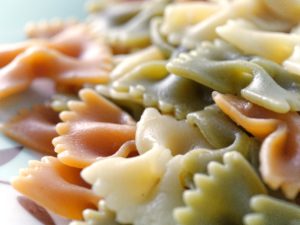
October is National Pasta Month – Enjoy these Vegan Pasta Dishes!

Posted on October 04, 2016 by The VRG Blog Editor

01227

October is National Pasta Month – Enjoy these Vegan Pasta Dishes!

Pasta can be prepared in so many ways vegan-style. Here’s links to pasta recipes and tips (as well as pasta sauces) we’ve run in previous issues of Vegetarian Journal:

Make Ahead Pasta Delights

Hot and Cold Pasta Salads

Pasta Perfect

Regional Italian and Sicilian Pasta Sauces

Vegan Mac and No-Cheese with Zucchini “Cream” Sauce

To subscribe to Vegetarian Journal, visit:
http://www.vrg.org/member/2013sv.php

Being a Vegan Teenager with Disapproving Parents

Posted on October 03, 2016 by The VRG Blog Editor

owme

By Alicia Hückmann, intern visiting from Germany

Growing up in a tiny, rural German village as the descendant of sausage-lovers, I was destined to get in trouble when I decided to become a vegan. To be fair, I was already 18 years old and moving into my own flat at that time, so I probably had different opportunities of dealing with the issue than younger teenagers might have. The arguments I regularly got into, the accusations I had to face, and the mistakes I made, however, were probably very similar to those of any other underage vegan. For this reason, I made a list of the three main reasons my parents did not approve of my diet and what I did (or could have done in retrospective) to prove them wrong.

Health
What they said: “Veganism is bad for your health. Your diet is not balanced at all.”
What I heard: “We don’t care if you did hours of research on nutrients because parents always know better and that’s a fact.”
What they probably meant to say: “We worry about you and we want you to be healthy. Some sources say that veganism is not good for teenagers and even though we don’t know for sure whether they are wrong, we would rather you listen to them than take an unnecessary risk.”

Whenever I talk to non-vegans about my experiences following a plant-based diet, health concerns are among the first things they respond with. Not very surprising considering how schools and dietitians constantly tell us that we need cow’s milk for our bones, that meat is full of iron and protein, and so forth. We are raised to believe that animal products are an indispensable part of a balanced diet. And although vegans statistically have a lower risk of developing typical diseases of civilization like diabetes, their diet is more commonly associated with malnutrition and deficiencies by the general public – and probably also by your parents. What many people don’t realize, however, is the fact that most vegans are just as aware of these requirements as they are. After all, switching to a healthy vegan diet often includes research that includes knowledge of nutrients and potential sources for them. For this reason, many vegans are actually much better informed about food than the average meat-eater!

So when talking to your parents about their health concerns, you want to make clear that you did enough research to make a responsible decision. If you haven’t already, check out The Vegetarian Resource Group’s general vegan nutrition guide (http://www.vrg.org/nutshell/vegan.htm), our brochure for vegan teenagers (http://www.vrg.org/nutrition/VeganNutritionForTeenagers.pdf) or other nutrition related articles (http://www.vrg.org/nutrition/) for scientific facts. Being able to list a few good sources for protein, iron, and calcium as well as to explain how to handle Vitamin D and B12 can be a good way of proving to your parents that you know what you’re doing. Also, put together an exemplary combination of fruits, vegetables, and grains or even a full menu that can provide you with enough nutrients to meet the recommended daily amount of all important nutrients.

If this doesn’t already convince your parents, you can offer to have your blood levels checked on a regular basis (which is something both vegans and non-vegans could be doing anyway). I had my first blood sample taken after about half a year of being a vegan – the results didn’t only take away much of my parents’ skepticism but also reassured me that my planning had worked out perfectly well. Most people when switching diets would not go to this extent though.

Extra burden/misinformation
What they said: “Vegan food is exorbitant; we don’t have enough money for that. Besides, do you expect me to cook for the family AND give you special treatment?”
What I heard: “We have no clue what veganism is all about but that doesn’t mean we have to listen to your explanations and suggestions when we can just give you a rant about it.”
What they probably meant to say: “The decisions you make often affect the entire family, not just yourself. We have enough things to worry about. If you ask for special treatment, it makes us feel like you don’t appreciate that we are already doing so much for you.

Due to the fact that I was already living on my own when I became a vegan, cooking is a rather minor issue for me and my family. The only times it becomes a bit problematic is during weekends and holidays when I come home. As my family’s kitchen is not exactly vegan-friendly – bread, apples, and tomatoes are among the few things that don’t contain any animal products – I often have to rely on them taking me to the closest grocery store in a nearby town.

So this is the first tip I have for you: Go shopping together with your family. Don’t just give them a list of the things you need. When it comes to processed vegan food especially, it can get pretty confusing for non-vegans – and you don’t want their first vegan shopping experiences to be frustrating. If they insist that veganism is expensive, prove them wrong. Instead of wasting your money on meat and dairy alternatives that you don’t necessarily need, try to focus on simple, healthy and cheap food like dry lentils (iron!) and beans (protein!) as well as fresh fruits and vegetables. You and your family will be surprised how much money can actually be saved by cutting down on animal products.

Once you’ve managed to sneak your vegan food into your family’s kitchen, you’ll have to find a solution for family dinners. While cooking for three or more people is already a lot of work, it gets worse if one of them demands a different meal. Then again, do you really need special treatment? Many (side) dishes can be enjoyed by both meat-eaters and vegans as they are – like stir-fried vegetables or soups – and sometimes there is only one or two ingredients that need to be replaced in order for the dish to be vegan. If your parents decide to make a salad for example, ask them to put some of it in a separate bowl before adding any non-vegan ingredients or dressing. Make a list of meals and sides that are vegan “by accident” (like spaghetti with tomato sauce) and that are enjoyed by everyone in the family. In case your parents are not very compromising (or not keen on eating vegetables in general), you’ll probably have to cook for yourself. With hundreds of thousands of quick and easy vegan recipes out there, this should not really be a problem though. Once you move out and have to rely on your own, you will probably be very thankful for this experience, by the way!

One final tip for this section: Never try to shame or convert anyone at the dinner table (or anywhere, ever). The best thing you can do in order to get people interested in and more accepting of your diet is setting a good example. If anyone makes comments about your food (how they could never live without xy, how plants are not filling at all, etc.), surprise your family with a vegan version of their favorite dish, a cake, muffins, or even a full vegan menu.

Growing up
What they said: “Vegan? That’s just another silly phase. Why can’t you just be a normal person like everyone else?
What I heard: “We have no intentions of taking you or your life choices seriously, no matter how grown up you think you are.”
What they probably meant to say: “We are not ready to accept that you are growing up so quickly and making life choices that are so different from ours. It gives us the impression that you are estranging yourself from us, maybe even willingly.

Looking back I know that many of the fights my family and I had about veganism were not about veganism at all. Did you notice that you could replace “vegan” with basically anything in the example above, be it an unusual hobby, a career path you’re interested in, or even the wish to get tattooed? During our teenage years, we struggle to find out who we are and what we want to do with our lives. And as if this wasn’t enough of a burden already, we also have to deal with the fact that our parents are not always happy with the results.

I like to think about my decision to go vegan as the tip of an iceberg. Just like the bit of ice that is visible above the surface, my diet was not actually a big issue in itself after a while, yet something of whose existence my family was reminded of each time we had a meal together. The many arguments we had as a result were not solely centered about veganism but always gradually drifted towards underlying and more deeply rooted issues like the fact that I was living away from home and that they hated my significant other. In the end, it all came back to their fear to lose touch with as well as control over me and to be unable to protect me from making (what they considered) bad decisions. At some point I realized that veganism really only served as a trigger or an excuse to start a fight about the topics they actually cared about.

So if your parents react unreasonably sensitive or aggressive to your new diet, try to look at the bigger picture. Are there any other issues that bother your parents at the moment? Do they have the impression that you are distancing themselves from them?

If yes, I am afraid this is an issue that cannot be solved as easily as the two before. The only tips I can give you for this one: Firstly, don’t join the argument. If you can already guess where it is going to end, make clear that you are not going to have the same discussion again unless they have any new questions that you haven’t answered yet. And secondly, let your parents know that no matter what you do, you will always love and appreciate them. On first sight, going vegan could be (wrongly) interpreted as estranging yourself from your meat-eating family – but doesn’t your choice rather prove that your parents succeeded in teaching you empathy, commitment, and critical thinking?

One final remark: While some parents are very supportive of their vegan children from the very beginning, others will need a little persuading in the beginning. And then there are parents like mine who will slowly start to tolerate their children’s diet choices after a year or longer. I have been a vegan for more than 1½ years now and finally reached a point where my family does not make comments about the food on my plate and mostly leaves me alone during meals. On the other hand, my sister has become a big fan of my cooking skills and always asks me to make a cake when she has a party. In the end, the most effective ways to convince someone that veganism isn’t that bad after all are patience, persistence, and kindness!

The Vegetarian Resource Group Has Compiled a Guide to Veggie Meals in or Near United States National Parks

Posted on September 30, 2016 by The VRG Blog Editor

grandcanyonridgeandoneillbutte

By Casey Brown and Heather Francis, Vegetarian Resource Group Interns

In conjunction with the 100th year anniversary of The National Park Service, over the past couple of months, we have been working on a project where we have been contacting the United States National Parks in hopes of finding out whether or not the parks offer vegetarian/vegan meals.

Over the course of the project we found most National Parks don’t have any vegan options for their park services. What we discovered were convenience stores and snack shacks for many visitors to stop by as they are traveling through the parks. Most convenience stores contain trail mix, nuts, and various fruit selections for vegan and vegetarians alike. Since most don’t have options, we have compiled a list of the National Parks with neighboring veg-friendly restaurants (if there are any). For the parks that do contain veg-friendly options, we added them to the list as well.

Although the list has taken two months to put together, it hasn’t been super difficult to reach these parks. The park rangers and staff working for the National Park Service have been super receptive in answering our questions about whether or not their park has vegetarian and vegan options. For example, in Bryce Canyon National Park in Utah The lodge at Bryce Canyon Restaurant contains vegan options on their menu with a Gardein Chicken substitute for lunch/dinner. Also at Crater Lake National Park in Oregon the Crater Lake Lodge Dining Room offers two options for dinner that are vegan: Roasted Portobello and a Vegetable Pasta Dish.

To read the entire article, visit:
http://www.vrg.org/travel/doc/NationalParkDining.pdf

Abell Street Festival

Posted on September 29, 2016 by The VRG Blog Editor

img_5716

By Casey Brown, VRG Intern

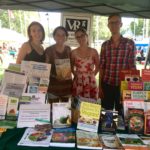
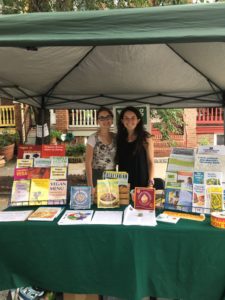
The other weekend I had the opportunity to volunteer at the Abell Street Festival in Baltimore. This event is held every year, and it features live music, non-profit organizations, vendors, food, and much more. It started with “A Day at the Museum” Parade, where many of kids from the community came dressed up in unique costumes. Following the parade, the festival began and the crowd dispersed to look at the various non-profit organizations and vendors that were there.

Another intern, Alicia, and I spent the afternoon at the festival interacting with a lot of people from the community around Abell Street. Throughout the day we met with a lot of vegans and vegetarians and people who were interested in the lifestyle. Others noticed our booth and became really excited because they knew friends who were vegan/vegetarian, and they wanted to take some of our resources and recipes home to share with them. Our Baltimore Dining Guide was especially popular among them since they were able to find information on vegan-friendly restaurants in the area for occasions when they were dining out with their vegan friends and partners.

We also met a man who was recently diagnosed with diabetes and was turning towards a plant-based lifestyle as part of his treatment. He was eager for more recipes and information on plant-based living. We were able to provide him with a copy of our Vegetarian Journal, multiple brochures including “Vegetarianism in a Nutshell,” and books like Vegan Menus for People with Diabetes. He was grateful for the information we provided him and seemed more confident in his decision to opt for a plant-based lifestyle after receiving these resources.

We spoke with another person who used to be a vegan, and he was hoping to transition back into the lifestyle. He was interested in learning more about our personal transitions, and he made sure to take plenty of resources in order to motivate himself. We even met an 11-year-old who told us she transitioned to the vegetarian lifestyle just two days prior to the festival. She was thrilled to see our booth, and her family was able to get information on vegetarian diets for children through our “Vegan Nutrition for Pregnancy and Childhood” brochure and our “Vegan MyPlate” handout. They also made sure to get a copy of Vegetarian journal for more information and recipe ideas. We spoke with another individual who told us that he was raising his son as a vegan. He made sure to take those same resources home as well as one of our “I Love Animals and Broccoli” coloring books. Many people at the festival were from the Baltimore area, and they were excited to hear about the Pre-Thanksgiving potluck that The VRG will be holding at the end of November, as this is a great opportunity to connect with more vegans in the area and to get inspiration for new recipes (see http://www.vrg.org/local/201608local.php#s11).

The other intern and I enjoyed the “young and alternative” environment the festival provided. It was really inspiring to see how many vegans/vegetarians were in the community and to connect with so many people who are passionate about the vegan movement. We are looking forward to the Pre-Thanksgiving potluck, and we hope to see many of you there!

If you would like to volunteer at future Vegetarian Resource Group booths, contact Brigette at [email protected]

To support VRG outreach, donate at www.vrg.org/donate

Or join at http://www.vrg.org/member/2013sv.php

  • Donate

  • Subscribe to the blog by RSS

  • VRG-NEWS

    Sign up for our newsletter to receive recipes, ingredient information, reviews of new products, announcements of new books, free samples of products, and other VRG materials.

    Your E-mail address:
    Your Name (optional):


↑ Top